Imagine typing a single sentence like “a futuristic city glowing under a rainy midnight sky” and watching a high-resolution, breathtaking image appear on your screen in seconds. That’s the magic of AI Image Generation.
Whether you’re a content creator, digital marketer, or graphic designer, AI image generators have completely changed how we create visual content. In this guide, we’ll break down how these tools work, which ones are worth your time, and how you can write prompts that get stunning results every single time.
What Exactly is AI Image Generation?
At its core, AI image generation uses advanced machine learning models (often called diffusion models) that have been trained on millions of images and text descriptions. When you input a text prompt, the AI interprets your words, understands the context, lighting, and style, and generates a brand-new image from scratch.
The Ultimate Guide to AI Image Generation in 2026: Tools, Prompts & Pro Tips
The Best AI Image Generators Right Now
The AI landscape moves fast, but a few tools clearly stand out from the crowd depending on what you need:
Midjourney (v6): Best for Realism & Artistry
If you want cinematic lighting, photorealistic textures, and breathtaking art, Midjourney remains the undisputed champion. It’s ideal for high-end creative work.
DALL-E 3 (via ChatGPT): Best for Ease of Use & Precise Details
DALL-E 3 shines when it comes to understanding complex prompts. It is also exceptionally good at rendering readable text inside images (like signs, logos, or posters).
Adobe Firefly: Best for Commercial & Professional Design
Trained on copyright-safe images, Firefly is perfect for commercial projects. It integrates seamlessly into Photoshop through tools like Generative Fill, making image editing effortless.
Leonardo.ai & Stable Diffusion: Best for Fine Control
If you want custom models, control over specific poses, or free daily credits to experiment with, these platforms offer the most technical flexibility.
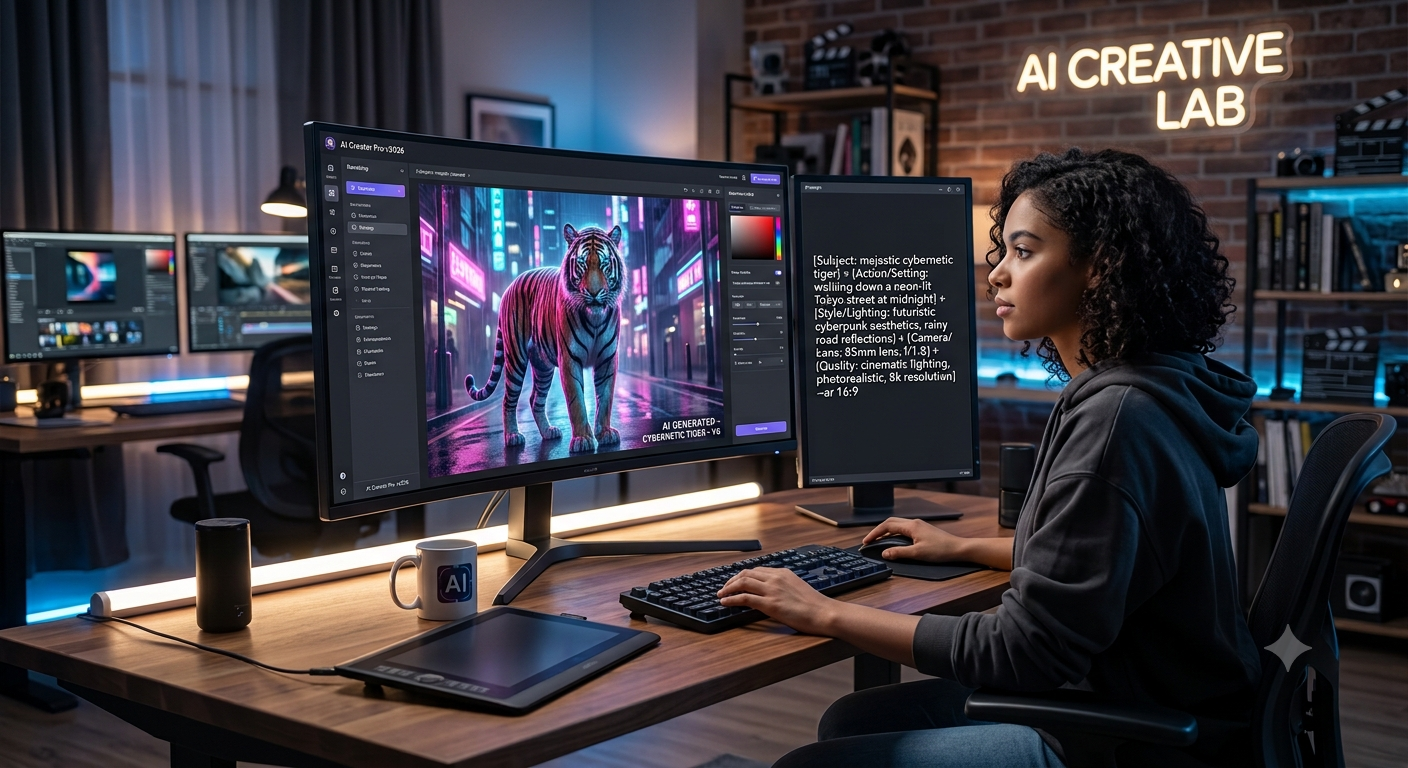
The Secret Formula to Writing Perfect AI Prompts
A common mistake beginners make is writing prompts that are too short or vague. To get predictable, stunning results, structure your prompt using this simple 5-part formula: