
Microsoft Takes Another Big Step in Artificial Intelligence
Artificial Intelligence is changing the technology industry faster than ever. From intelligent chatbots to automated software development, AI is becoming an important part of everyday life and business operations.
Technology companies are investing billions of dollars to develop smarter, faster and more affordable AI systems. Microsoft is one of the major companies leading this competition.
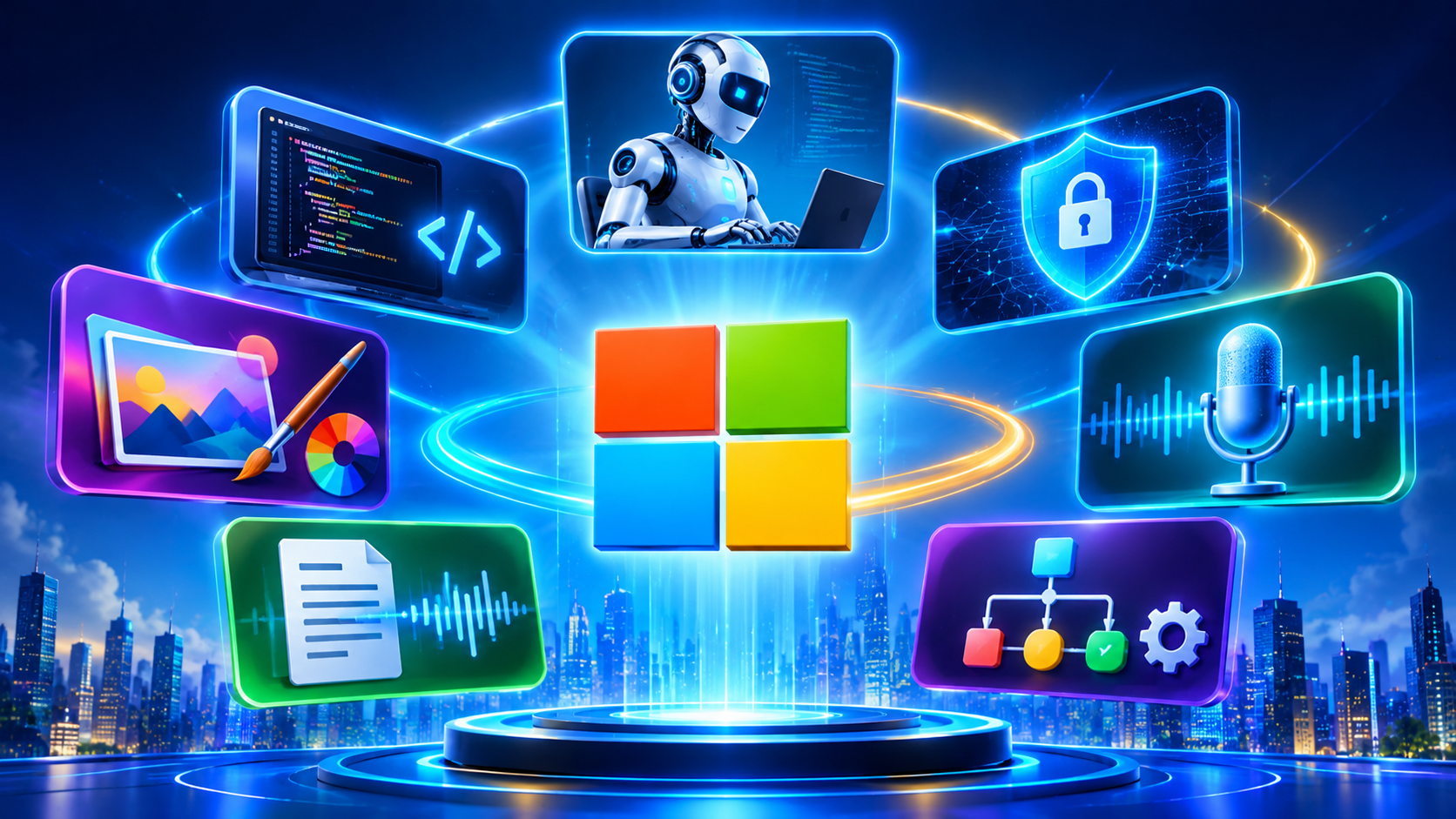
In a major announcement at its Microsoft Ignite 2026 conference on November 17, Microsoft introduced a new family of seven specialised AI models designed for different tasks, including software development, cybersecurity, image generation, voice communication, transcription and decision-making.
These developments are part of Microsoft’s growing MAI (Microsoft AI) model family. The company’s objective is to provide powerful AI capabilities at lower operating costs so businesses and developers can use AI more extensively.
Unlike traditional AI chatbots that mainly answer questions, these new models are designed to perform specialised tasks and support more advanced AI applications.
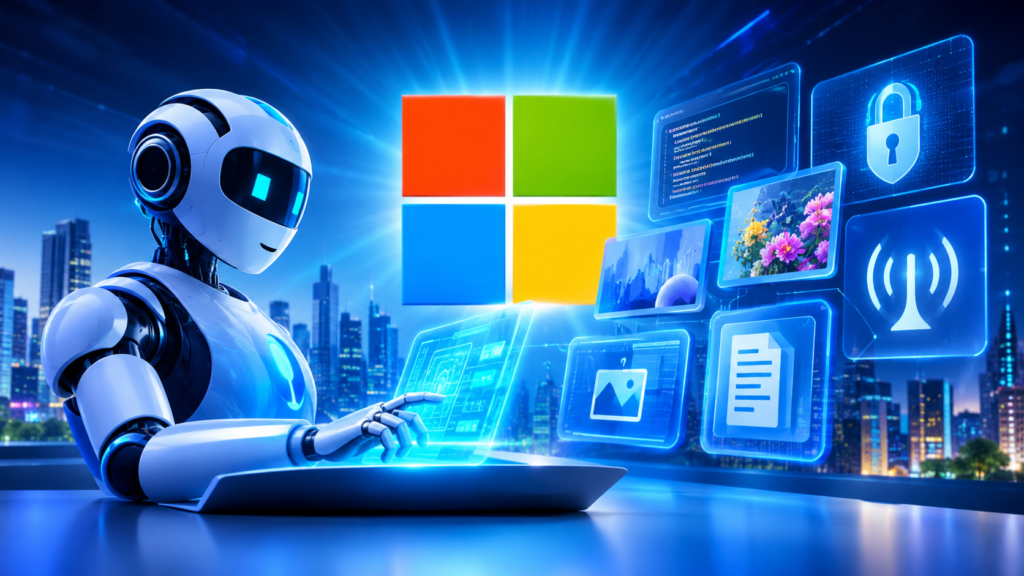
For example, one model focuses on helping software developers write code, another supports cybersecurity professionals, and another can generate and edit images using artificial intelligence.
But what exactly are Microsoft’s seven new AI tools? What can they do, and how could they affect students, developers, businesses and employment?
Let’s explore Microsoft’s latest AI developments in detail.
1. MAI Code 2: A Powerful AI Tool for Software Developers
One of the most important announcements from Microsoft is MAI Code 2, an advanced AI model designed specifically for software development.
Writing software can be a complicated process. Developers often spend hours writing code, finding programming errors, testing applications and improving existing projects.
MAI Code 2 is designed to make these activities more efficient.
Main Features of MAI Code 2
- Helps developers write and improve software code.
- Supports debugging and error identification.
- Understands multiple files within a software project.
- Assists with complex programming tasks.
- Helps developers create applications and dashboards.
- Supports reasoning across larger code repositories.
For example, imagine a developer creating an online shopping website. The project contains hundreds of files, and a payment-related error appears.
Instead of checking every file manually, the developer can use an AI coding assistant to examine relevant parts of the project and suggest possible solutions.
Microsoft says MAI Code 2 is designed for everyday enterprise coding tasks and is available through GitHub Copilot and Microsoft Foundry.
Why it matters: This technology could help software developers reduce repetitive work and concentrate more on solving complex programming problems.
2. MAI Code 2 Flash: Faster and More Affordable Coding Assistance
Microsoft also introduced MAI Code 2 Flash, a faster and more cost-efficient version designed for routine programming activities.
While MAI Code 2 targets more demanding software development tasks, the Flash model is designed for frequent, smaller coding activities.
Main Features
- Explains existing programming code.
- Suggests targeted code changes.
- Helps fix routine programming errors.
- Supports quick coding improvements.
- Assists with repeated development tasks.
For example, a student learning Python may need help understanding a particular function. MAI Code 2 Flash could help explain what the code does and suggest improvements.
It can also support developers who need to make small changes without using a more expensive model for every request.
Microsoft announced availability through GitHub Copilot, with additional access through Microsoft Foundry.
Why it matters: Faster and lower-cost coding models could make AI-powered development more accessible to smaller businesses, developers and students.
3. MAI Cyber 2 Flash: AI-Powered Cybersecurity Protection
Cybersecurity is becoming increasingly important as people and businesses depend on digital platforms.
Online banking, social media accounts, business networks and government services all face potential cyber threats.
Microsoft introduced MAI Cyber 2 Flash, a specialised AI model designed to support cybersecurity professionals.
Main Features
- Helps identify software vulnerabilities.
- Supports security investigations.
- Assists with threat analysis.
- Helps security professionals examine suspicious activity.
- Supports defensive cybersecurity workflows.
For example, if a company discovers suspicious activity on its computer network, AI-powered security systems can help investigate the incident and identify possible weaknesses.
Security professionals can then use this information to decide how to respond.
Microsoft says MAI Cyber 2 Flash achieved strong results on its cybersecurity benchmark at a substantially lower cost per task than the comparison model.
However, this model is not a general-purpose public chatbot. Its deployment is focused on Microsoft’s security ecosystem and eligible defenders.
Why it matters: AI-powered cybersecurity could help organisations identify threats more efficiently and improve their ability to protect digital information.
4. MAI Image 2.7: AI Image Generation and Editing
Artificial Intelligence is also transforming graphic design and digital content creation.
Microsoft introduced MAI Image 2.7, an AI model designed to generate and edit images.
This technology could be useful for designers, content creators, marketing professionals and businesses.
Main Features
- Generates images from text instructions.
- Supports image editing.
- Helps modify visual elements.
- Supports creative design activities.
- Can be used for marketing and digital content.
For example, a blogger writing an article about artificial intelligence may need a professional featured image.
An AI image-generation model can help create a visual based on a written description.
A business could also use AI image editing to explore different visual designs for its products.
Microsoft also introduced MAI Image 2.7 Flash, which is designed for higher-volume image-generation requirements at a lower cost.
The image models are available through Microsoft Foundry, with additional access information provided through Microsoft’s MAI Labs.
Why it matters: AI image-generation technology could reduce the time required for certain creative tasks and make digital design more accessible.
5. MAI Realtime 1: A New Generation of Voice AI
Voice-based artificial intelligence is becoming an important part of modern technology.
People increasingly want to communicate with computers naturally instead of typing every question.
To support this development, Microsoft introduced MAI Realtime 1, its first live speech-to-speech AI model.
It is designed to support natural conversations with low delays.
Main Features
- Processes spoken conversations.
- Supports real-time speech-to-speech interactions.
- Helps build voice-powered AI assistants.
- Supports interactive applications.
- Is designed for natural conversational experiences.
Imagine contacting an AI assistant to ask about a product or service.
Instead of typing your question and waiting for a written response, you could speak naturally and receive a spoken answer.
This technology could be useful in customer support, virtual assistants and other voice-based applications.
Microsoft announced that MAI Realtime 1 starts at $0.01 per audio minute, with availability through its early-access programme.
Why it matters: Real-time voice AI could make digital assistants more natural and convenient to use.
6. MAI Transcribe 2: Converting Speech Into Text
Another important development is Microsoft’s speech transcription technology.
MAI Transcribe 2 is a model designed to convert spoken language into written text.
Transcription technology is useful in education, healthcare, business meetings and media production.
Main Features
- Converts audio into written text.
- Supports multilingual transcription workflows.
- Helps create written records of conversations.
- Supports professional documentation.
- Can improve the efficiency of transcription activities.
For example, imagine a student attending a long online lecture.
Instead of manually writing every sentence, speech transcription technology can help convert the lecture audio into text that can later be reviewed.
Healthcare professionals can also benefit from transcription technology when preparing medical documentation.
Microsoft says its Dragon Copilot Transcribe system, built on MAI Transcribe 2, supports around 10 million patient encounters per month.
This is a company-reported figure.
Why it matters: AI transcription can save time, improve documentation workflows and make spoken information easier to search and review.
7. Microsoft Decision 1.1: Smarter AI Decision-Making
The seventh development is Microsoft Decision 1.1, an AI model designed to support decision-making in automated systems.
Modern AI agents often need to make many small decisions before completing a task.
For example, an AI-powered customer support system may need to determine which department should handle a request, whether an issue is urgent and which tool should be used to solve it.
Microsoft Decision 1.1 is designed to support these activities.
Main Features
- Routes requests to appropriate AI models.
- Supports classification and prioritisation.
- Helps verify completed tasks.
- Supports workflow management.
- Provides multimodal capabilities.
For example, a company may use several AI models for different activities. One model handles customer questions, another analyses documents and another generates reports.
Decision 1.1 can help determine which model should handle a particular request.
Microsoft says more than 4,000 customers have already used this model.
Why it matters: Intelligent decision-making could help organisations manage AI systems more efficiently while controlling operating costs.
Comparison: Microsoft’s Seven New AI Models
| AI model | Main purpose | Potential users |
|---|---|---|
| MAI Code 2 | Advanced coding | Developers |
| MAI Code 2 Flash | Routine coding | Developers and students |
| MAI Cyber 2 Flash | Cybersecurity | Security professionals |
| MAI Image 2.7 | Image generation and editing | Designers and creators |
| MAI Realtime 1 | Live voice conversations | Businesses and developers |
| MAI Transcribe 2 | Speech transcription | Students and professionals |
| Microsoft Decision 1.1 | AI decision-making | Businesses and developers |
Note: MAI Transcribe 2 is the underlying model for Dragon Copilot Transcribe. The seven announcements are product and model offerings, not seven universally available free applications. MAI Image 2.7 Flash is an additional variant of the image model.
How Will Microsoft’s New AI Tools Affect Jobs and Employment?
One of the biggest questions about artificial intelligence is whether AI will replace human workers.
Microsoft’s latest developments show that AI is becoming capable of performing more specialised activities in programming, cybersecurity, design and business operations.
This could change how people work in several industries.
1. Impact on Software Developers
AI coding models can assist with programming, debugging and software development.
Developers may spend less time on repetitive coding activities and more time on software architecture, testing and problem-solving.
2. Impact on Designers and Content Creators
AI image-generation models can help create visual content more quickly.
However, creative thinking, originality and an understanding of audiences will remain valuable skills.
3. Impact on Cybersecurity Professionals
AI security tools can help professionals investigate vulnerabilities and identify potential threats.
At the same time, human supervision will remain essential for important security decisions.
4. New Career Opportunities
As AI adoption increases, demand may grow for professionals with skills in:
- Artificial intelligence and machine learning.
- Software development.
- Cybersecurity.
- Data analysis.
- AI system management.
- Cloud computing.
Students should therefore focus on developing technical knowledge, communication skills and critical thinking.
AI is likely to transform many jobs, but its overall impact on employment will depend on how businesses adopt the technology.
Why Are Microsoft’s Seven AI Models Important?
Microsoft’s latest AI developments are important for several reasons.
1. Specialised AI technology: Different models are designed for specific activities rather than relying on one general-purpose system.
2. Lower operating costs: Microsoft is focusing on making AI more affordable for businesses that use it frequently.
3. Better productivity: AI tools can help developers, designers and professionals complete repetitive tasks.
4. Increased competition: Microsoft’s in-house AI development adds more competition to the global artificial intelligence industry.
5. Business automation: These models can support more advanced AI agents capable of completing multiple steps in a workflow.
Microsoft also announced that its second-generation Maia 200 AI accelerator is now in production. This is an important hardware development supporting its broader AI infrastructure, although it is not one of the seven models.
Frequently Asked Questions (FAQs)
1. What are Microsoft’s seven new AI tools in 2026?
Microsoft announced seven specialised AI offerings at Ignite 2026: MAI Code 2, MAI Code 2 Flash, MAI Cyber 2 Flash, MAI Image 2.7, MAI Realtime 1, Dragon Copilot Transcribe powered by MAI Transcribe 2, and Microsoft Decision 1.1.
2. What is MAI Code 2?
MAI Code 2 is a coding-focused AI model developed by Microsoft. It helps developers with programming, debugging and complex software development tasks.
3. Is Microsoft’s new AI technology free?
Not all of Microsoft’s new AI models are free. Availability depends on the product, platform, subscription, access programme and usage limits.
4. What is MAI Cyber 2 Flash used for?
MAI Cyber 2 Flash is designed to support cybersecurity professionals with defensive security tasks, threat analysis and vulnerability identification.
5. Can students use Microsoft’s new AI models?
Students can access certain AI features through platforms such as GitHub Copilot, subject to eligibility and usage limits. Access to the full MAI model family is not universally available to students.
6. What is Microsoft Decision 1.1?
Microsoft Decision 1.1 is a model designed to help AI applications make decisions involving routing, classification, prioritisation and workflow verification.
7. Will Microsoft’s new AI models replace human workers?
These models may automate certain tasks, but they are also expected to change existing jobs and create opportunities in AI, software development, cybersecurity and related industries. The overall impact remains uncertain.
Conclusion: Microsoft Is Expanding Its AI Capabilities
Microsoft’s introduction of seven new AI offerings at Ignite 2026 represents another important development in the global artificial intelligence industry.
From MAI Code 2 and Cyber 2 Flash to Image 2.7 and Realtime 1, the company is developing specialised AI technologies for different industries and professional activities.
These models could help developers write code, cybersecurity teams investigate threats, designers create images and businesses automate everyday workflows.
However, AI technology also introduces challenges involving data privacy, security, employment and responsible use.
For students and professionals, understanding these developments is becoming increasingly important. Learning how AI works and developing the skills to use it responsibly could create valuable opportunities in the coming years.
The future of technology will not be shaped by artificial intelligence alone. It will also depend on how effectively humans use AI to solve problems, improve productivity and create new possibilities.