



If you’ve been running digital ad campaigns over the last few years, you know the game has completely shifted. Remember when setting up a performance campaign meant spending hours manually adjusting bids, building fifty different audience clusters, and tweaking ad copies line by line?
Fast forward to 2026, and the landscape looks radically different. Artificial intelligence isn’t just a fancy add-on tool anymore—it’s essentially the engine running the whole show.
So, what does AI-driven performance marketing actually look like today, and how are smart growth teams leveraging it to stay ahead? Let’s break it down without the technical jargon.
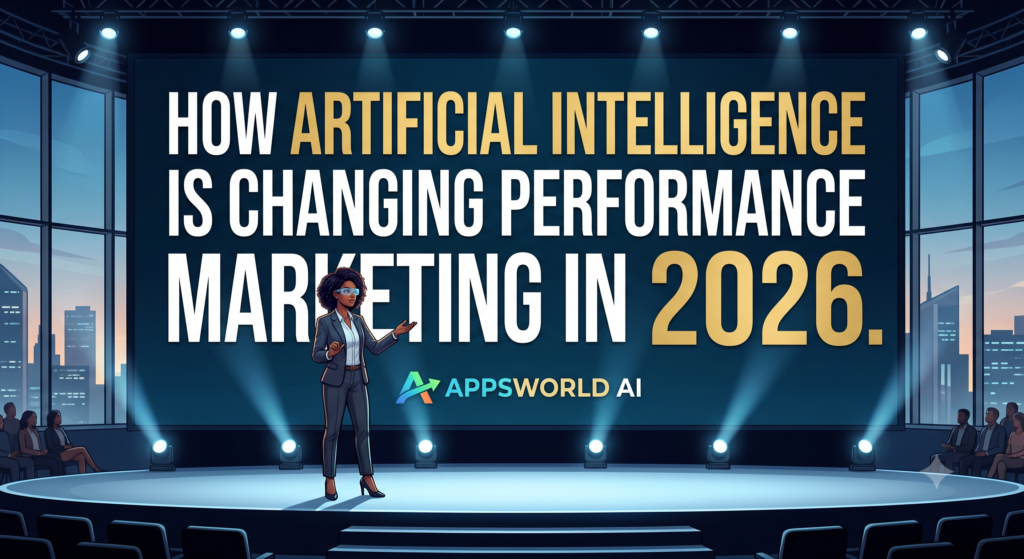
1. Hyper-Personalization at True Scale
A few years ago, “personalized marketing” meant inserting {First_Name} into an email or running basic retargeting ads.
Today, AI handles real-time creative dynamic generation. Instead of creating 3 or 4 static banner variations for an app install campaign, AI models can assemble hundreds of context-aware variations on the fly. It matches copy tone, visual hooks, and specific calls-to-action based on a user’s real-time intent, browsing behavior, and device context.
2. Predictive Budget Allocation (Goodbye, Wasted Spend)
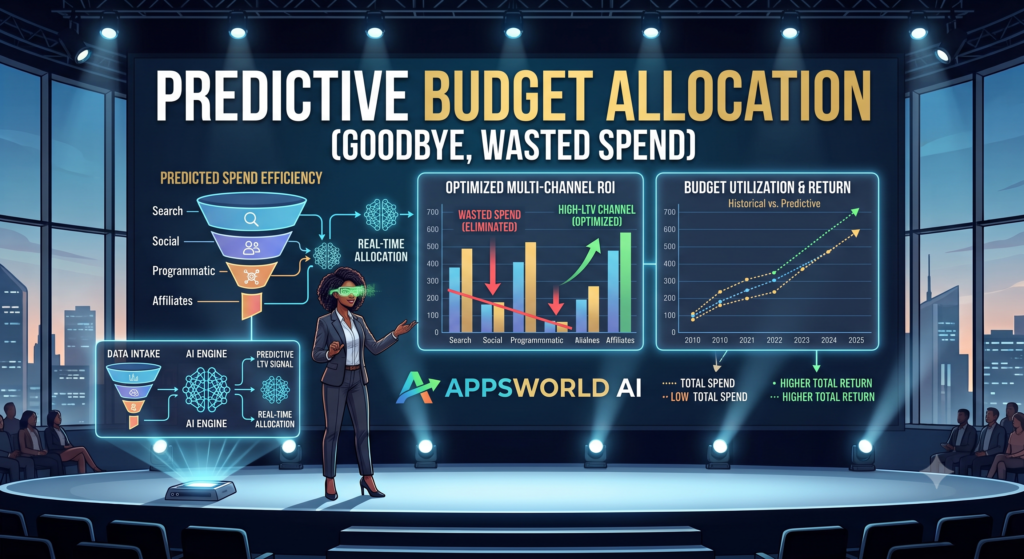
One of the biggest headaches in performance marketing has always been budget allocation across platforms—Google, Meta, TikTok, programmatic DSPs, and affiliate networks.
Previously, media buyers had to wait for 24 to 48 hours of conversion data to shift budgets manually. In 2026, predictive AI models analyze cross-channel signals in real time.
If an algorithm detects that a specific demographic cohort on a programmatic channel is driving higher 7-day retention or LTV (Lifetime Value), it automatically shifts ad spend there before the customer acquisition cost (CAC) spikes elsewhere. You stop burning money on underperforming segments while you sleep.
3. Smarter Fraud Detection in Mobile & Digital Ads
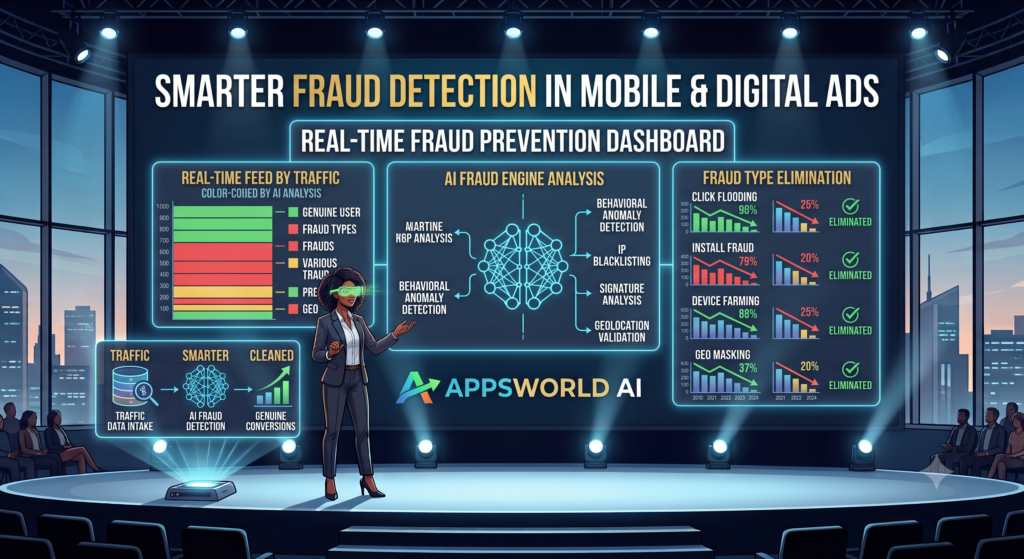
Ad fraud has always been a pain point, especially in mobile app user acquisition (UA) and affiliate campaigns. Fake installs, bot traffic, and click-flooding used to eat up significant chunks of performance budgets.
Modern AI models look past surface-level metrics like clicks or immediate installs. They analyze post-install behavioral patterns—how a user interacts with the app, session lengths, in-app navigation velocity, and event triggers. If a pattern looks synthetic or non-human, the system flags and blocks the attribution instantly.
This means your marketing dollars actually go toward real, high-intent human users.
4. The Shift from CAC to LTV-Based Optimization
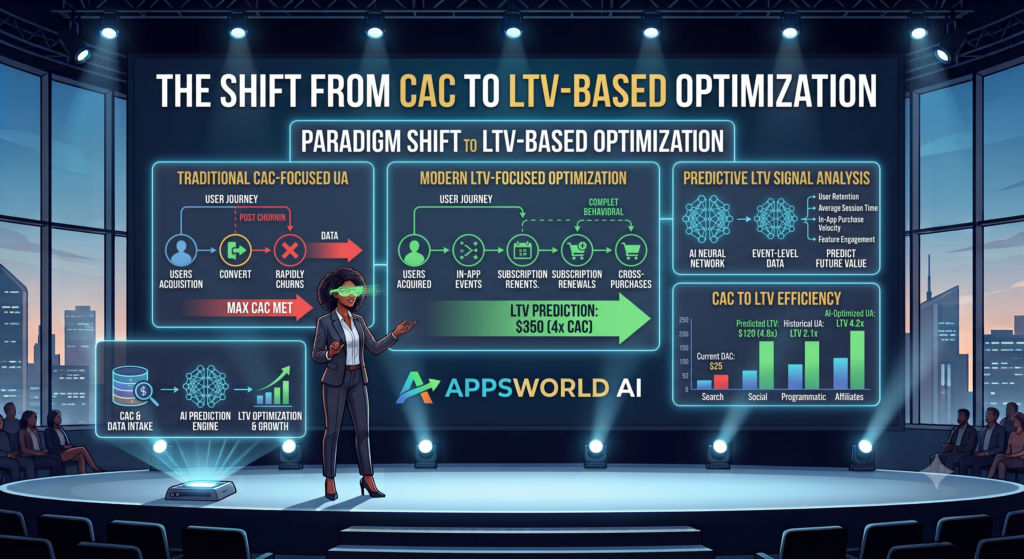
Focusing solely on immediate Cost Per Acquisition (CPA) or Cost Per Install (CPI) is becoming an outdated strategy. A cheap install is useless if the user uninstalls the app two hours later.
AI has made predictive LTV modeling accessible. Algorithms can predict with surprising accuracy within the first 24 to 48 hours of user interaction whether a new lead or user will turn into a high-value customer over 60 or 90 days. Performance marketers are now training bidding algorithms against predicted long-term value rather than just the initial click or conversion.
5. What Does This Mean for Marketers?
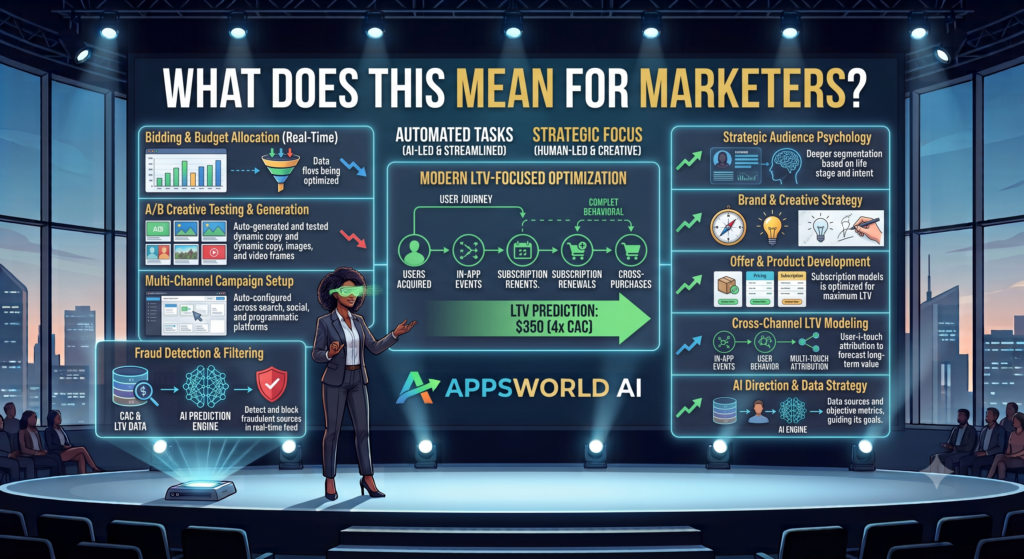
With AI managing bidding, dynamic creatives, and fraud protection, a common question arises: Are performance marketers becoming obsolete?
Not at all. The job description has just evolved.
-
Fewer mechanical tasks: Less time spent staring at spreadsheets, micro-adjusting CPCs, or manually setting up campaign structures.
-
More strategic focus: More time spent on consumer psychology, overarching brand positioning, offers, product-market alignment, and high-level strategy.
AI is an incredible co-pilot, but it still requires human directional strategy, creative intuition, and deep domain knowledge to feed it the right goals and positioning.
Conclusion: Embracing the Future of AI Marketing
The rise of AI in performance marketing isn’t about replacing human creativity or strategic decision-making—it’s about amplifying it. By taking over real-time bidding, fraud detection, and multi-channel budget optimization, AI frees marketers to focus on what truly matters: understanding audience psychology, crafting compelling hooks, and driving sustainable LTV growth.
In 2026 and beyond, the most successful brands won’t just be the ones spending the most on ads, but those leveraging AI-driven data to make every single ad dollar work smarter.
Frequently Asked Questions :
Q1. How is AI used in performance marketing in 2026?
Ans: AI is used to automate programmatic bidding, optimize ad creatives dynamically in real time, detect ad fraud before it drains budgets, and predict long-term customer value (LTV) to ensure maximum ROI across channels.
Q2. Will AI replace performance marketers and media buyers?
Ans: No. AI replaces repetitive manual tasks like budget shifting, CPC micro-adjustments, and ad variations. However, human strategy, consumer psychology, brand storytelling, and campaign direction are still essential to guide AI systems effectively.
Q3. How does AI help reduce ad fraud in mobile user acquisition?
Ans: AI analyzes post-install user behavioral patterns (such as session velocity and event triggers) rather than relying only on surface metrics like clicks or installs. If a pattern looks non-human or synthetic, the system blocks attribution instantly in real time.
Q4. What is the difference between CAC-based and LTV-based optimization?
Ans: CAC (Customer Acquisition Cost) optimization focuses purely on getting the cheapest initial conversion or install. LTV (Lifetime Value) optimization uses predictive AI models to target users who are most likely to stay engaged, make in-app purchases, or renew subscriptions over 60–90 days.
Q5. How can AppsWorld AI help scale my app growth campaigns?
Ans: AppsWorld AI provides an AI-driven platform that automates performance marketing campaigns, prevents ad fraud, optimizes media spend across channels, and targets high-intent users to deliver higher LTV with zero ad waste.


How To Use AI For SEO: A Simple Step-by-Step Guide For Beginners
[…] Artificial Intelligence (AI), you can complete many of these tasks in […]