

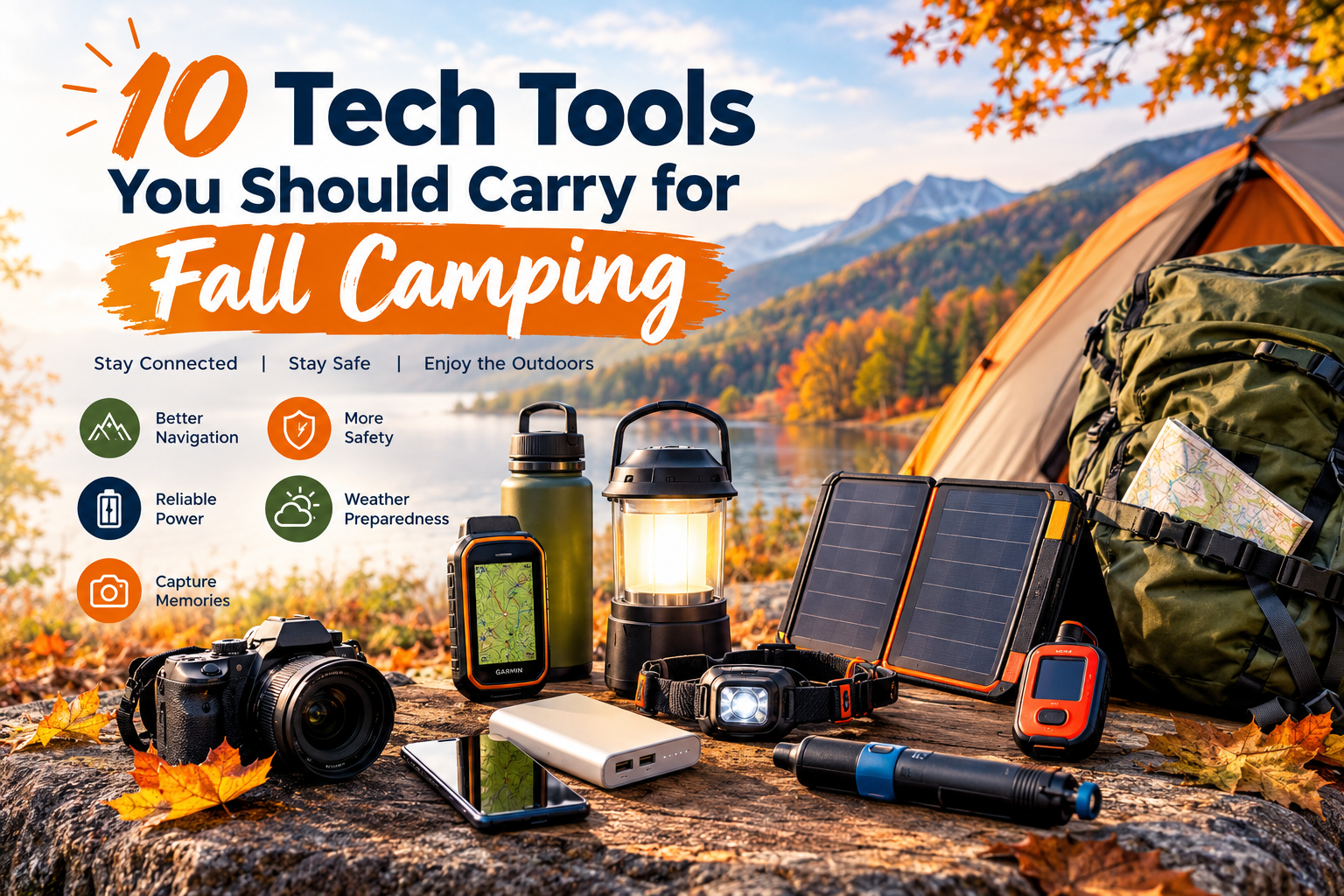
10 Tech Tools You Should Carry for Fall Camping
Fall is one of the best seasons for camping. The weather is cooler, the trees turn beautiful shades of orange and yellow, and spending time outdoors becomes a refreshing break from everyday life. Whether you are planning a weekend trip to the mountains, a peaceful night beside a lake, or a family camping adventure in the forest, autumn offers plenty of opportunities to enjoy nature.
However, fall camping also comes with a few challenges. Temperatures can drop quickly after sunset, daylight hours become shorter, and unexpected rain or strong winds can make your trip more difficult. That is why packing the right technology can make your outdoor experience safer, more comfortable, and more enjoyable.
You do not need to carry every new gadget available on the market. Instead, focus on practical camping technology that helps you navigate trails, stay connected during emergencies, keep your devices charged, and manage changing weather conditions.
In this guide, we will explore 10 tech tools you should carry for fall camping, along with their benefits, important features, and tips for choosing the right equipment for your next outdoor adventure.
Why Do You Need Tech Tools for Fall Camping?
Camping is all about enjoying nature, but preparation is essential when you are spending time away from modern conveniences. During fall, shorter days and unpredictable weather can create additional challenges for campers.
The right camping gadgets can help you:
- Navigate unfamiliar trails without getting lost.
- Stay informed about temperature changes and approaching rain.
- Keep your phone and emergency devices charged.
- Improve visibility around your campsite after dark.
- Communicate with family members or emergency services when needed.
- Capture beautiful autumn landscapes and camping memories.
Technology should support your outdoor experience rather than distract you from it. Choose lightweight, reliable tools that solve real problems and fit comfortably inside your backpack.
1. Portable Power Bank
A portable power bank is one of the most useful tech accessories for any camping trip. Your smartphone, GPS device, camera, and other electronic gadgets may run out of battery when you need them most.
Cold weather can also reduce battery performance, making power management particularly important during fall camping.
A reliable power bank allows you to recharge essential devices without needing an electrical outlet.
Features to look for:
- A capacity of 10,000–20,000 mAh for typical weekend trips, depending on your devices.
- USB-C fast charging.
- Multiple charging ports.
- A durable, travel-friendly design.
- Built-in battery and temperature protection.
For longer trips, consider a higher-capacity power bank, provided its weight is manageable. Keep it inside your backpack or sleeping bag when temperatures drop, following the manufacturer’s storage instructions.
Camping tip: Charge your power bank fully before leaving home and carry the correct cables for all your devices. Avoid relying on a single power source for emergency equipment.
2. GPS Navigation Device
A GPS navigation device can be extremely helpful when exploring unfamiliar hiking trails or camping locations. Although smartphones offer navigation apps, a dedicated GPS unit may provide better durability, longer battery life, or more dependable outdoor navigation features.
Many handheld GPS devices support downloadable maps, way-point marking, route tracking, and location sharing.
These features can help you find your campsite, follow planned hiking routes, and retrace your steps if necessary.
Features to look for:
- Offline map support.
- Accurate satellite positioning.
- Water-resistant construction.
- Long battery life.
- Emergency location-sharing features, where available.
Before your trip, download the maps you need and learn how to use the device. Remember that GPS positioning does not guarantee access to emergency services or communication with other people.
Camping tip: Carry a traditional paper map and compass as backups. Electronic devices can fail because of dead batteries, damage, or technical problems.
3. Rechargeable LED Headlamp
When the sun sets earlier in autumn, a dependable light source becomes essential. A rechargeable LED headlamp allows you to move around the campsite while keeping both hands free.
You can use it to prepare dinner, organize your tent, walk to nearby facilities, or find equipment inside your backpack.
Compared with a handheld flashlight, a headlamp directs light where you look, making everyday camping tasks easier.
Features to look for:
- Adjustable brightness settings.
- A comfortable, adjustable head strap.
- Water resistance.
- A red-light mode to help preserve night vision.
- A rechargeable battery or replaceable batteries.
- A lockout feature to prevent accidental activation in your bag.
Brightness is important, but maximum lumen are not the only consideration. Battery runtime, beam distance, comfort, and ease of use matter just as much.
Camping tip: Pack a spare light source and keep your headlamp within easy reach. Charge it before departure, and carry spare batteries if your model supports them.
4. Weather Station or Digital Thermometer
Fall weather can change quickly, especially in forests, mountain regions, and areas near lakes. A compact digital thermometer or portable weather station can help you understand the conditions around your campsite.
Depending on the model, it may measure ambient temperature, humidity, atmospheric pressure, or other environmental information.
Knowing the temperature can help you make better decisions about clothing layers, sleeping arrangements, and when to return from a hike.
Some advanced devices also offer weather alerts or connect to a smartphone app.
Features to look for:
- Clear temperature readings.
- Humidity monitoring.
- A weather-resistant design.
- Easy-to-read display.
- Useful alerts, if supported.
A thermometer measures current conditions but does not necessarily predict future weather. For forecasts, use a trusted weather service whenever you have connectivity, and check local advisories before heading out.
Camping tip: Never depend on a small weather gadget as your only source of safety information. Mountain weather can change rapidly, and conditions at your campsite may differ from those in a regional forecast.
5. Satellite Messenger or Personal Locator Beacon
If you plan to camp in remote areas with limited or no mobile coverage, an emergency communication device can be one of the most important items you carry.
Satellite messengers and personal locator beacons serve different purposes, so it is important to understand the difference.
A satellite messenger may allow you to send messages, share your location, and request assistance through a supported satellite network. Many require an active subscription.
A personal locator beacon, or PLB, is designed primarily to transmit a distress signal through an established satellite search-and-rescue system.
Features to look for:
- Coverage suitable for your destination.
- Reliable emergency signaling.
- Clear activation instructions.
- Durable, water-resistant construction.
- Long battery life.
- Two-way messaging, if you need regular communication.
Before purchasing a device, confirm that it works in your intended camping region and understand its limitations.
Camping tip: Register your beacon where required, test the device according to the manufacturer’s instructions, and tell someone your planned route and expected return time.
Do not assume that a satellite device will work equally well in dense forests, deep valleys, or areas with obstructed sky visibility.
6. Solar Camping Charger
A solar camping charger can provide additional power when you spend several days outdoors. Unlike a conventional power bank, a solar charger uses sunlight to generate electricity.
Portable solar panels are available in foldable designs that can attach to a backpack or sit near your campsite.
They are particularly useful for campers who need to recharge small electronics during extended trips.
However, their performance depends on sunlight, panel size, weather, and positioning. Short autumn days and cloudy conditions may reduce charging efficiency.
Features to look for:
- Lightweight, foldable panels.
- USB charging compatibility.
- Weather-resistant construction.
- Built-in charging protection.
- Compatibility with your power bank or devices.
For many campers, a solar panel works best when paired with a power bank rather than used as the only charging solution.
Camping tip: Place the panel where it receives direct sunlight and follow the manufacturer’s instructions. Keep your electronics protected from moisture and avoid leaving sensitive equipment in excessive heat.
7. Smartwatch or Outdoor Fitness Watch
An outdoor smartwatch can help you track your activity and monitor useful information throughout your camping trip.
Many outdoor watches offer GPS tracking, an altimeter, a barometer, a digital compass, and activity tracking. Some models also provide route navigation and safety notifications.
These features are valuable when hiking through unfamiliar areas or planning longer outdoor adventures.
Features to look for:
- Long battery life.
- GPS tracking.
- Water resistance.
- Compass and altitude information.
- Offline route navigation, where supported.
- A readable display in bright sunlight.
Battery performance varies considerably between watches, especially when GPS tracking is enabled continuously. If you are planning a multi-day trip, check the advertised battery life for the exact mode you intend to use.
Camping tip: Download routes before leaving home and learn how to access the essential features without an internet connection. Keep a separate navigation backup rather than depending entirely on your watch.
8. Compact Camping Lantern
A rechargeable camping lantern makes your campsite more comfortable after dark. While a headlamp is ideal for hands-free movement, a lantern provides broader illumination inside a tent or around a designated cooking and sitting area.
Modern lanterns come with features such as adjustable brightness, multiple lighting modes, USB charging, and battery indicators.
Some models can also function as emergency power banks, although their charging capacity may be limited.
Features to look for:
- Adjustable brightness.
- Long operating time.
- A stable base or hanging hook.
- Water-resistant construction.
- USB-C charging.
- A battery-level indicator.
Choose a lantern that provides enough light for your tent without adding unnecessary weight to your backpack.
Camping tip: Use LED lighting to reduce battery consumption, and keep a separate backup flashlight. Avoid placing a lantern where it could fall onto bedding or interfere with safe cooking arrangements.
9. Portable Water Purifier or UV Water Purification Device
Clean drinking water is essential for every camping trip. Carrying enough water from home may work for short outings, but longer hikes can require additional supplies.
Portable water filters, purification tablets, and UV water purification devices offer different ways to treat water when used correctly.
A UV purifier can inactivate many microorganisms in suitable clear water, while filters can remove certain bacteria, protozoa, and sediment depending on their specifications.
However, not every purification method protects against every possible contaminant.
Features to look for:
- Effectiveness against the microorganisms relevant to your destination.
- A lightweight, portable design.
- Simple operation.
- Reliable battery life for electronic purifiers.
- Compatibility with your water bottles or containers.
Check local water-quality guidance before your trip. Some filters do not remove viruses, chemicals, or dissolved contaminants, and cloudy water may need pre-filtration before treatment.
Camping tip: Carry a backup purification method. Follow the manufacturer’s instructions carefully, and never assume that clear-looking water is automatically safe to drink.
10. Action Camera or Compact Digital Camera
Fall camping offers excellent opportunities for photography. Colorful leaves, misty mornings, mountain views, campfires, and wildlife can create memorable pictures.
An action camera or compact digital camera allows you to capture these moments without depending entirely on your smartphone.
Action cameras are especially useful for hiking, cycling, and outdoor activities because many models are compact and designed for demanding conditions.
A compact digital camera may be a better option if image quality, zoom, or low-light photography is your main priority.
Features to look for:
- Good image stabilization.
- Long battery life.
- Water resistance or a compatible protective case.
- High-quality photo and video recording.
- Easy file transfer.
- Support for external storage, where available.
Before buying a camera, consider the type of photographs you want to take. You do not need an expensive professional camera to capture beautiful autumn scenery.
Camping tip: Carry an extra memory card and keep spare batteries warm when practical. Protect your equipment from rain, condensation, dust, and accidental drops.
Bonus Tips for Packing Camping Technology
Choosing the right equipment is only part of preparing for a successful outdoor adventure. How you pack and use your gadgets also matters.
1. Prioritize essential devices
Start with equipment that improves safety, navigation, lighting, and communication. Entertainment gadgets and accessories should come afterward.
2. Protect electronics from cold and moisture
Low temperatures can affect battery performance, while condensation and rain may damage sensitive equipment. Use waterproof pouches or dry bags, and follow the manufacturer’s recommended operating and storage temperatures.
3. Download important information before leaving
Save offline maps, campsite details, emergency contacts, and relevant travel information. Mobile networks may be unavailable in remote locations.
4. Carry backup equipment
Do not rely on a single electronic device for every essential function. A paper map, compass, spare light, and backup power source can make a significant difference when technology fails.
5. Check every device before departure
Charge your batteries, inspect cables, test your headlamp, verify GPS maps, and confirm that your emergency communication device is ready for use.
6. Keep technology lightweight
Extra gadgets can quickly increase backpack weight. Choose tools that serve multiple useful purposes, but avoid compromising essential safety equipment just to save a few grams.
Frequently Asked Questions (FAQs)
What are the most important tech tools for fall camping?
A portable power bank, reliable headlamp, navigation device, weather-information source, and suitable emergency communication equipment are among the most useful options. Your exact needs depend on your destination, trip duration, and mobile coverage.
How do I keep my phone battery from draining during cold-weather camping?
Keep your phone in an insulated pocket when not in use, reduce unnecessary screen brightness, close power-intensive apps, and use airplane mode when you do not need a network connection. Follow the manufacturer’s temperature recommendations and avoid charging a battery outside its permitted temperature range.
Is a solar charger worth carrying for fall camping?
A solar charger can be useful on longer trips, particularly when you have access to sufficient sunlight. However, reduced daylight and cloudy weather can limit its output. Pairing a solar panel with a fully charged power bank provides greater flexibility.
Do I need a satellite messenger for camping?
A satellite messenger or PLB is worth considering when you visit remote locations with unreliable mobile coverage. The appropriate choice depends on your need for two-way communication, emergency signaling, regional coverage, and subscription costs.
What is the best lighting equipment for camping?
A headlamp is ideal for personal movement and hands-free tasks, while a camping lantern is useful for illuminating a tent or campsite. Carrying both provides flexibility, and a spare flashlight offers an additional backup.
How can I make camping more comfortable in fall?
Wear appropriate clothing layers, use a sleeping bag rated for the expected temperatures, check the forecast, carry adequate water, and prepare for rain and early darkness. Technology helps with planning, but suitable clothing and shelter remain essential.
Final Thoughts
Fall camping is a wonderful way to enjoy nature, escape busy routines, and explore the outdoors. With the right preparation, you can experience the beauty of autumn while staying comfortable and ready for unexpected situations.
These 10 tech tools you should carry for fall camping offer practical benefits, from reliable navigation and better lighting to emergency communication, water treatment, and photography.
You do not need to purchase every gadget on this list. Begin with the essentials that match your destination and camping style, then add specialized equipment as your outdoor experience grows.
Most importantly, remember that technology is a backup to good preparation, not a replacement for it. Check weather conditions, share your itinerary with someone you trust, follow local camping rules, and always carry suitable non-electronic safety equipment.
Pack smart, stay prepared, and enjoy everything the beautiful fall season has to offer.